OCTOBER 8TH, 2026
Air Vanuatu Plans Second ATR 72-600 as Domestic Network Recovery Continues

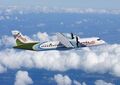
Air Vanuatu is evaluating the addition of a second ATR 72-600 as the state-owned carrier rebuilds its domestic network and expands its Twin Otter fleet following the airline’s liquidation in 2024.
The airline currently operates one ATR 72-600, leaving its busiest domestic routes vulnerable to scheduled maintenance disruptions. The aircraft entered a heavy maintenance check on October 3 and is expected to remain out of service until November 5, resulting in reduced services to Santo and Tanna.
To maintain additional capacity between Port Vila and Santo during the maintenance period, Air Vanuatu has arranged supplementary Airbus A320 services operated by Solomon Airlines. Tanna continues to receive Twin Otter services.
The carrier is also preparing to introduce another government-owned Twin Otter, expected to arrive from the United States during October. The aircraft, registered YJ-AV16, will increase the Twin Otter fleet from four to five following completion of registration and acceptance procedures. The Vanuatu government has invested VT1.1 billion in two additional Twin Otters, including one delivered in January 2026.
Domestic network restoration is progressing alongside the fleet expansion. Air Vanuatu resumed services to Ipota on September 6 and Dillon’s Bay on September 27, restoring scheduled connections to both Erromango airstrips. Aniwa is expected to follow once remaining operational and regulatory requirements are completed.
The airline reports that on-time performance has improved from approximately 50% in June to 90%, while domestic fares have remained unchanged despite increases in aviation fuel costs.
Chief Executive Philippe Busson, who assumed the position in August, is overseeing a restructuring focused on cost control, operational reliability and restoring financial sustainability.
Beyond domestic operations, Air Vanuatu is exploring interline and codeshare arrangements with airlines in New Caledonia and Fiji, while maintaining its existing cooperation with Solomon Airlines. The longer-term strategy includes resuming regional international services using its own aircraft once the domestic network and fleet have stabilized.