MAY 1ST, 2026
Air Canada Q1 2026 Earnings Call Summary

Key Financial Results
- Q1 Adjusted EBITDA: $623 million (61% YoY) – Q1 record, 10.8% margin
- Adjusted EPS: -$0.05 loss (vs -$0.45 loss Q1 2025) – beat market expectations
- Operating Revenue: $5.8 billion (11% YoY)
- Passenger Revenue: $4.8 billion (+11% YoY)
- PRASM: +8% on 2% more capacity
- Operating Cash Flow: $1.8 billion (Q1 record)
- Free Cash Flow: $1.6 billion (Q1 record), including $283M from sale-leaseback proceeds
- Adjusted CASM: +5.5% YoY (primarily from higher labor costs per prior agreements)
Balance Sheet & Capital Allocation
- Net Leverage: 1.4x EBITDA
- Liquidity Target: 15% of revenues
- Share Buybacks: Repurchased ~8M shares for $142M in Q1; $1.5B cumulative vs $2B target
- Share Count Reduction: 287M shares outstanding (20% reduction since Sept 2024)
- Sale-Leaseback Strategy: Restoring fleet ownership to historical 65%-70% over next 2 years
- Debt Maturity: Will repay August maturity using on-balance sheet liquidity
- NCIB Pause: Share repurchases paused near-term after debt paydown, revisit in H2
Fuel Crisis Response & Guidance
Full Year Guidance Suspended due to fuel price uncertainty
Q2 2026 Guidance:
- Adjusted EBITDA: $575M – $725M
- Capacity (ASM): +0.5% to +1% YoY
- Fuel Assumption: USD $4.15/gallon (forward curve as of April 28); CAD $1.28/liter including taxes, transportation, hedging
- Forward Yields: Ticketing mid-teens above last year (~USD $4/gallon equivalent)
- Fuel Recovery: Expect to offset 50%-60% of incremental fuel expense through commercial/cost actions + hedging
Q1 Fuel Impact:
- ~$90M gross headwind; ~$55M net after hedging
- Lower-priced inventory + hedging moderated Q1 impact
- Fuel expense broadly flat YoY in Q1
- Elevated prices expected to be more impactful starting Q2
H2 2026 Outlook (if fuel stays at forward curve):
- Q3: Low 70s% fuel recovery achievable (was mid-to-upper 70s% on April 22 curve)
- Q4: “Obviously very good” recovery expected
- Pricing at ~$4/gallon equivalent; if fuel drops below $4, recovery improves further
Fuel Hedging:
- Q2: Hedged (contributes to 50%-60% offset)
- Q3/Q4: No hedges – straight pass-through on fuel
- ~1/3 of Q2 fuel still unpriced as of call date
Capacity Management
- Q2: +0.5% to +1% capacity growth
- Q3: Monitoring 2-3 months at a time; currently reviewing July-early September
- Actions: Trimming lower-profitability flights, hub bypasses, marginal frequencies
- Philosophy: 2-month rolling decisions given volatility; “risk containment mode, not playing market share game”
- Q4: Too early to determine; demand signals suggest strong period (consistent with record Q4s in 2024-2025)
Commercial Performance & Demand
Revenue Strength:
- International: 17% YoY (sustained intercontinental demand)
- Atlantic: Solid mid-teen unit revenue growth in Q1
- Premium: +11% YoY; business class outpaced economy by 2 percentage points
- Corporate: +14% YoY across all geographies
- Sixth Freedom: Record Q1 results, +18% YoY revenue
– LatAm expansion drove >50% of growth (LatAm-Europe, LatAm-Asia)
- Cargo: +4% YoY; spot rates increased, introduced carrier surcharge
- Air Canada Vacations: Record Q1 revenue (19% in “other revenues”)
Q1 Load Factor: Record Q1 load factor, ~5 points above North American peers
Demand Resilience:
- No demand degradation observed despite multiple fare increases
- Strong across most geographies and customer types
- Q3 book load factor ~2 points ahead of last year at same time
- Bookings “in the green” for past 2 months
- “Strong demand across network and throughout booking curve” into H2
Fare Actions:
- Air Canada “one of first airlines” to implement increases as crisis unfolded
- Multiple rounds of passenger fare and ancillary increases
- Fare increases adopted “almost unanimously” by competitors across Americas
- Premium segments showing good elasticity and willingness to pay
- Some pressure in lower market segments (more price-sensitive)
Booking Curve Insights:
- Q2: ~50% booked pre-fare increases
- Q3: ~25% booked pre-increases
Geographic & Segment Trends
Q2 Outlook by Region:
- North America: Much more resilient; fewer RPMs pre-booked = higher yield potential
- Atlantic: Higher yields expected
- Pacific: More challenging; carrier surcharges regulated by governments (Korea, Japan, China)
By Cabin:
- Premium yields/demand “really, really strong” carrying through Q3 and early Q4
- Air Canada more exposed to premium segments than competitors
Sixth Freedom Detail:
- Middle East hub closures: Minimal passenger impact (single India flight performing well); benefit mainly on cargo side
- US-Europe/Europe-US: Low single-digit revenue growth
- LatAm-Europe & LatAm-Asia: Major growth driver (~50% of 18% Q1 revenue increase)
- “Just the beginning” – geographic advantage to exploit
Transborder:
- “Really solid Q1” and “really solid Q2” expected
- Seeing yield, load factor, and significant PRASM gains
- Demand-supply balance more favorable; some soft rebound in market
Operational Performance
- Q1 brought challenges: Cold winter, ice storms, sun destination disruptions, Middle East conditions
- Operations teams responded with “focus and compassion”
- Record consecutive quarterly results validate “strongest commercial foundation in history”
- Load factor performance “leading amongst peers”
Fleet & Product
New Aircraft:
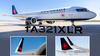
- First Airbus A321XLR delivered; inaugural flight June 15
- Additional deliveries expected: 2 Boeing 787-10s in 2026
- Only Canadian airline offering lie-flat seats on narrow-body
- A321XLR deployment: Transatlantic and key North American routes (Toronto, Montreal)
Fleet Transformation:
- Completed 7 Boeing 737 MAX conversions to Air Canada Rouge; on track for 45 by year-end
- Standardizing Rouge fleet to “most fuel-efficient and purpose-built for leisure travel”
- 2026 retirements: 14-15 older aircraft (A319s, others)
Fuel Efficiency:
- Making gauge adjustments if fuel rationing occurs
- Can deploy more fuel-efficient jets to affected destinations
Long-term Fleet Plan:
- Focused on structural demand, not short-term volatility
- Growth centered on restoring wide-body capacity (currently underserving)
- Continuing Sixth Freedom build-out
- Plan still works; short-term tweaks as needed
Fuel Supply & Availability
- Canadian hubs: “Feel very good” – significant infrastructure, inventory, supply fluidity
- Fuel contracted 1-2 months ahead at Canadian hubs
- Europe (next 8 weeks): Suppliers validated supply chains and capacity; “looks solid”
- Monitoring deeper uncertainty; prepared to adjust gauge/fleet if rationing occurs
- Daily conversations with suppliers
Cost Management
- Q1 total nonfuel costs “broadly in line with internal expectations”
- CASM pressure primarily from labor (prior agreements), operational inefficiencies (capacity constraints, cancellations, weather, sun market issues)
- Initiated actions across organization for variable cost savings through improved planning, optimization, operational discipline
Q2 CASM Considerations:
- Higher fares = higher sales commissions (appears in CASM though revenue-driven)
- High load factors pressure unit costs
- Front half 2026 CASM higher than back half
- Back half likely inflation-type YoY growth
Cost Reduction Program: Sufficient to hold unit costs in line; preserves flexibility for further capacity adjustments
Labor Relations
- Successfully negotiated 2 new contracts with Unifor (pilot and flight attendant crew scheduling teams) in Q1
- Commitment to “constructive direct union-management relations”
Competitive Environment
- Fare increases adopted “almost unanimously” across Americas
- Competitors taking capacity out May-June; left summer schedules relatively intact
- Similar 2-month planning philosophy industry-wide
Strategic Outlook
- Entering “growth phase of long-term strategy” after 2 consecutive quarters of record results
- Focus: Disciplined execution, prioritizing returns, cash generation, balance sheet strength
- “Poised to play both offense and defense”
- Continue New Frontiers objectives despite short-term challenges
- Diversified network, premium positioning, loyal customer base provide resilience
Leadership Transition
CEO Michael Rousseau announced upcoming retirement after ~20 years with Air Canada; supporting company through transition period.
Management emphasized Air Canada’s attributes for navigating turbulence: scale, diversified network, premium demand exposure, strong brand, resilient balance sheet. Confident in long-term positioning despite short-term fuel-driven headwinds.