AUGUST 27TH, 2025
Braathens airline streamlines fleet
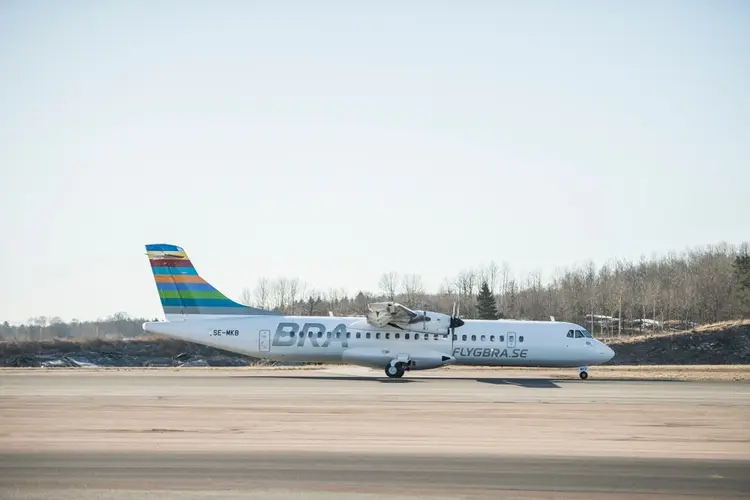
In connection with the expiration of the company’s long-term commercial agreement for Airbus production, a market review has been carried out to ensure that the fleet strategy is in line with future market needs and creates long-term profitable growth. In order to better meet customer demand, the board of directors has decided on a direction that involves a growing unit fleet of the ATR72-600 turboprop aircraft and a gradual phasing out of Airbus. As a result, Braathens will become a pure ACMI supplier in the turboprop aircraft segment in the European aviation market.
The strategic focus is partly based on the fact that agreements with tour operators are expiring soon, while the company’s current Airbus aircraft are no longer considered optimally configured to meet the requirements of both tour operator customers and traditional airlines with unit fleets. Braathens therefore sees a need to adapt the fleet in the long term to better meet market needs.
More and more airlines are investing in unit fleets to achieve increased efficiency and economies of scale, while the need for flexible capacity continues to grow. ACMI solutions are attractive because it allows airlines to quickly adapt fleets to meet changing needs. Turboprop aircraft in particular have a central role because they are energy and climate efficient and are suitable for evaluating new routes, covering seasonal variation and offering more departures on routes where larger aircraft are not profitable. For Braathens, this means that demand is primarily directed towards the ATR72-600, while the current Airbus fleet does not meet needs in a commercially sustainable way.
- Our transition began last year. In light of how the market has developed and its needs, we do not believe that Airbus production has the potential to achieve long-term profitability. We have a great responsibility towards employees, customers, passengers and owners to offer the market the type of aircraft capacity that is in demand. By adapting our operations, we will be able to offer ACMI solutions that are in demand while building a more streamlined and cost-effective business that has good potential for growth, says Per G. Braathen, Chairman of the Board and owner of Braathens.
The company’s long-term commercial agreement regarding Airbus production runs until December 2026. A total of seven aircraft are affected and will be gradually phased out of the fleet by 2027. In line with the new fleet strategy, the company intends to, to the greatest extent possible, offer affected personnel the opportunity to continue serving on, or with, the ATR72-600. Dialogue with the relevant unions has been initiated.Work continues to further develop the business with the goal of increasing efficiency, reducing costs and continuing to develop Braathens as a workplace.
- It is of course with sadness that we are phasing out Airbus from the fleet, but we must focus on the market segment where we have the best conditions to develop the company in the long term. We hope that employees who are affected to the greatest extent possible will both want and be able to stay with the company. Our goal is to continue developing an attractive and sustainable workplace with good opportunities for long-term development for both employees and the business. We are now continuing our transition towards the areas where we have the best conditions to grow, strengthen our competitiveness and create new opportunities – both for the company and for our employees, says Malin Brandtvig, CEO of Braathens.